COVID Updates - October 2020
Dr. Joel Weisblat • October 22, 2020
COVID-19 - October Updates from Dr. Joel Weisblat
Dear Patient,
We are now 7 months into this pandemic, and unfortunately it shows no signs of abating. We may in fact be headed into the most challenging period yet. Here are my latest thoughts:
1) Case numbers of Covid-19 are clearly on the rise, both in Ohio and nationally. Statewide we are averaging over 2000 cases per day for the past week. Cuyahoga County has moved from the “orange” to “red” level and is on watch for going to the highest risk level, “purple”. Daily cases in the county are twice what they were at the beginning of the month.
2) The reasons for the increase are multiple. It appears the virus transmits more easily in cold weather, but more importantly, more of us may be congregating indoors as the weather worsens. It is unclear if school gatherings are a significant factor, but continued remote learning seems the prudent course.
3) The good news is that we do appear to be treating Covid more effectively, as the mortality rates have clearly fallen. However, if a large number of cases of Covid (and influenza) overwhelm health care systems, it may be difficult to maintain those lower mortality rates.
4) More and more evidence indicates that the virus is transmitted primarily by close contact indoors. Wearing masks and maintaining social distance helps, as does limiting the amount of time in contact with an infected person.
5) Although the virus may persist on surfaces, it appears there may not be a sufficient number of viral particles to cause infection when an infected surface is contacted. Regular handwashing remains important, but avoiding close contact with people indoors is paramount.
6) Many of us are struggling with the restrictions necessary to protect ourselves and our families, as the isolation clearly takes a toll. Please let us know if there is anything we can do to help get you through this difficult time. Unfortunately, it is more important than ever that we stay vigilant, as obviously the risk of infection rises with the number of cases nearby.
7) At Advanced Internal Medicine, we have been seeing a few patients in the office, but only for quick visits that don’t involve respiratory symptoms. We are finding that much can be done through telemedicine or telephone services. We encourage our patients to call and let us know what’s going on, so that we can determine how best to give you the care that you need.
8) We are giving flu shots in the office several days per week. If you haven’t had one yet, please give us a call. Preventing widespread influenza is a big part of fighting Covid this winter.
9) Hope remains that a safe and effective vaccine will be approved early next year. In the meantime, keep yourselves and your families safe, and have faith that life will eventually return to normal.
Best wishes,
Joel D. Weisblat, M.D
Dr. Joel Weisblat's Blog
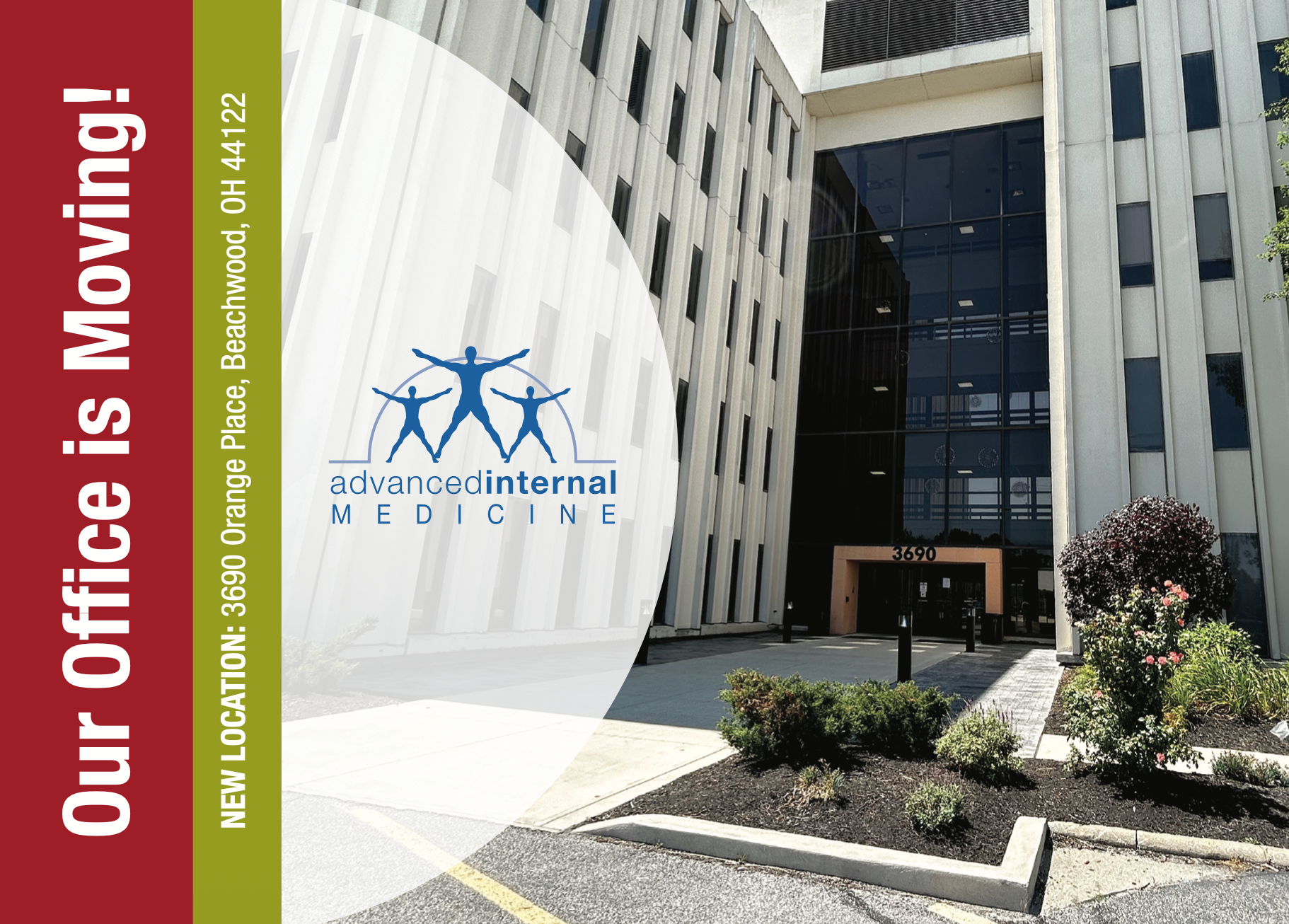
When: Friday, August 28 and Saturday, August 29: closed for the move. Monday, August 31: open at the new address.

Labor Day 2024 COVID UPDATE
SPRING COVID UPDATE
Dr. Joel Weisblat provides COVID updates for September 2022
MARCH COVID UPDATE
JANUARY COVID UPDATE
DECEMBER COVID UPDATE
THANKSGIVING COVID UPDATE
FALL COVID UPDATE
Dear Patient: There has been a lot of news about the pandemic in recent weeks, and also a lot of confusion. Today’s update is in the FAQ form, in response to many of your concerns. 1) What is the current state of the Covid-19 pandemic? Obviously, it isn’t good, but there may be reason for optimism. The number of cases nationally seems to have plateaued, albeit at a high level, and the number of people vaccinated is steadily growing. Unfortunately, in Ohio, things are likely to get worse before they get better. Case numbers in the state are averaging above 4000 daily, higher than in many months. 2) What can I do to protect myself from infection? The same things we’ve been recommending all along. Wear a mask indoors in public places, keep your distance from those who may not have been vaccinated, and of course, if you haven’t been fully vaccinated, get it done today. 3) I thought the vaccines were effective, why are people talking about boosters? The Pfizer, Moderna and J&J vaccines have all proven to be quite effective at preventing serious Covid infections. However, we are seeing some waning immunity after 6 months, which is leading to a number of “breakthrough” cases. The good news is that the vast majority of these cases are mild or asymptomatic, with no more than a few days of illness. Even 6 or 8 months after completing vaccination, you remain very unlikely to contract a serious Covid infection. 4) What is a booster shot? Should I get it, and if so, when? A booster is just another dose of the vaccine, no different that the ones you already received. It is designed to further enhance the immune system’s ability to combat the Covid virus should it enter your body in some way. The CDC currently recommends a 3rd dose of Pfizer or Moderna in those who meet their strict definition of immune compromise, or (beginning Sept. 20) in those who are 8 months out from their 2nd dose. No recommendation regarding J&J boosters has yet been made. 5) Aren’t there drugs now that can treat Covid? Two drugs have been approved for treatment of SARS-Cov-2 infections. Remdesivir is an antiviral medication that has been shown to reduce mortality and length of stay in hospitalized patients. Regeneron has created a cocktail of monoclonal antibodies (REGEN-COV), which directly attack the virus, and it has been approved for use in Covid-positive patients who are not seriously ill, and in some cases for prophylaxis. Hydroxycholoroquine (an antimalarial drug) and ivermectin (an antiparasitic drug) have not been shown to be of any benefit in fighting Covid, may in fact be dangerous, and should not be used under any circumstances. 6) What do I do if I have been exposed to Covid? A vaccinated person exposed to Covid does not need to quarantine, but should get tested several days after exposure. Vaccinated individuals who are positive do not shed as much virus as unvaccinated individuals, and so are unlikely to transmit the virus to other vaccinated individuals. Nonetheless, those who are unvaccinated or otherwise at high risk for serious Covid infection may be eligible for prophylactic monoclonal antibody treatment. 7) Where can I get treated? If you meet the criteria listed above, you are a candidate for the Regeneron cocktail. Please call the office and we can confirm your eligibility, order the injection, and direct you to a facility where you can receive it. 8) Is this ever going to end? Yes. One-third of Americans have now been infected with Covid, and over 60% of the eligible population has been fully vaccinated. This means that the pool of susceptible individuals is shrinking every day. We will reach a point where there simply aren’t enough susceptible individuals to sustain community outbreaks. The sooner people get their vaccines, the more they wear masks in risky settings, the sooner we will reach that point. Most experts believe that by early next year the virus will no longer be a serious threat in most areas of the country. 9) What can I do to do help? Encourage your friends and family who are reluctant to get vaccinated to get their shots. Keep wearing your mask indoors and practice social distancing. Let us know if you are feeling sick, so we can guide you to the appropriate treatment. And don’t despair! There is a light at the end of the tunnel. Joel D. Weisblat, M.D.